
By Daily Cloud Blog
Practical cloud, security, and infrastructure insights for modern IT professionals.
Microsoft Defender: A Modern Approach to Enterprise Security
Cybersecurity has evolved far beyond traditional antivirus software. Today’s threats are stealthy, identity-focused, and cloud-aware — and defending against them requires visibility, automation, and correlation across your entire environment.
That’s where Microsoft Defender comes in.
Once known simply as Windows Defender, Microsoft Defender is now a full enterprise security platform delivering XDR (Extended Detection and Response) across endpoints, identities, email, applications, and cloud workloads.
What Is Microsoft Defender?
Microsoft Defender is a unified security ecosystem tightly integrated with Microsoft 365 and Azure. It enables security teams to:
- Detect advanced threats using AI and behavioral analytics
- Correlate alerts into a single incident timeline
- Automate investigation and remediation
- Reduce alert fatigue and SOC burnout
Instead of reacting to thousands of alerts, teams focus on high-confidence incidents.
Microsoft Defender Product Suite a Quick Breakdown
Defender for Endpoint

Advanced endpoint protection for Windows, macOS, Linux, iOS, and Android.
Use case:
Detects fileless attacks, ransomware behavior, and lateral movement — even when no malware file exists.
Defender for Identity

Protects on-prem and hybrid Active Directory environments.
Why it matters:
Most breaches begin with credential theft, not malware.
Defender for Office 365

Email and collaboration security for Outlook, Teams, SharePoint, and OneDrive.
Stops:
Phishing, malicious attachments, business email compromise (BEC).
Defender for Cloud
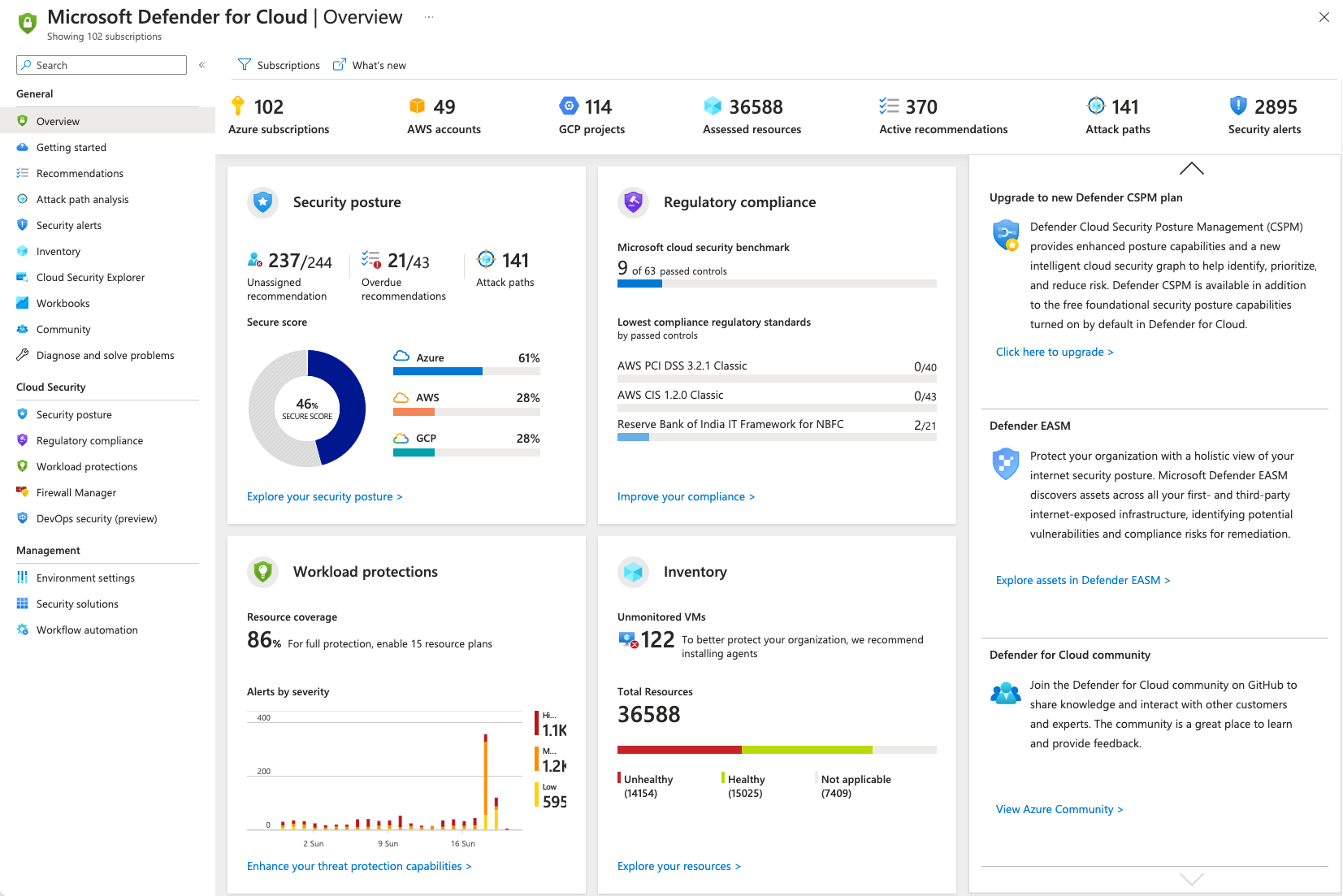
Secures Azure, AWS, GCP, and on-prem workloads.
Highlights:
- Cloud Security Posture Management (CSPM)
- Vulnerability detection
- Regulatory compliance alignment
The Real Power: Defender XDR
Microsoft Defender’s biggest strength is XDR correlation.

Instead of isolated alerts, Defender:
- Connects endpoint, identity, email, and cloud signals
- Builds a single attack narrative
- Automates containment actions

This dramatically improves:
- Mean Time to Detect (MTTD)
- Mean Time to Respond (MTTR)
Why Microsoft Defender Is Gaining Momentum
✔ Native Microsoft integration
✔ Lower total cost of ownership
✔ Strong Zero Trust alignment
✔ Built-in automation and response
✔ Scales from SMB to federal environments
For Microsoft-centric organizations, Defender often replaces multiple security tools.
Final Thoughts
Microsoft Defender has matured into a top-tier enterprise security platform. When deployed correctly, it delivers deep protection without unnecessary complexity.
For organizations already invested in Microsoft, Defender isn’t just security — it’s security strategy.
For more information about Microsoft Defender, visit the Microsoft Defender Official Site HERE
📌 More security insights at Daily Cloud Blog




 My Daily Cloud Blog
Leave a comment