Proxmox VE Hypervisor: A Modern Open-Source Alternative to Traditional Virtualization
Daily Cloud Blog | Cloud • Infrastructure • Architecture
As organizations reassess virtualization strategies—especially amid rising licensing costs—Proxmox Virtual Environment (VE) has emerged as a powerful, open-source alternative for running on-prem and private cloud workloads.
At Daily Cloud Blog, we focus on practical, real-world cloud and infrastructure technologies. In this article, we’ll break down what Proxmox VE is, how it works, and where it fits in modern IT environments—from homelabs to small and mid-sized enterprise deployments.
What Is Proxmox VE?
Proxmox VE is a Debian-based, open-source virtualization platform that combines two proven technologies into a single management experience:
- KVM (Kernel-based Virtual Machine) for full virtual machines
- LXC (Linux Containers) for lightweight, containerized workloads
Both are managed through a centralized web-based interface, making Proxmox easy to deploy, operate, and scale.
Key Features at a Glance
- Unified management for VMs and containers
- Native clustering and high availability
- Flexible storage and networking options
- No per-core or per-VM licensing
- Optional enterprise support subscriptions
This combination makes Proxmox especially attractive for cost-conscious teams that still require enterprise-grade capabilities.
Virtualization with KVM and LXC
KVM Virtual Machines
Proxmox uses KVM to deliver full virtualization for:
- Windows and Linux workloads
- Database servers and line-of-business apps
- Infrastructure services requiring full OS isolation
Features include snapshots, live migration, and resource controls comparable to traditional enterprise hypervisors.
LXC Containers
For lightweight workloads, Proxmox supports LXC containers:
- Near bare-metal performance
- Fast provisioning and low overhead
- Ideal for dev/test, automation tools, and infrastructure services
This dual-model approach allows teams to choose the right abstraction for each workload.
Clustering and High Availability
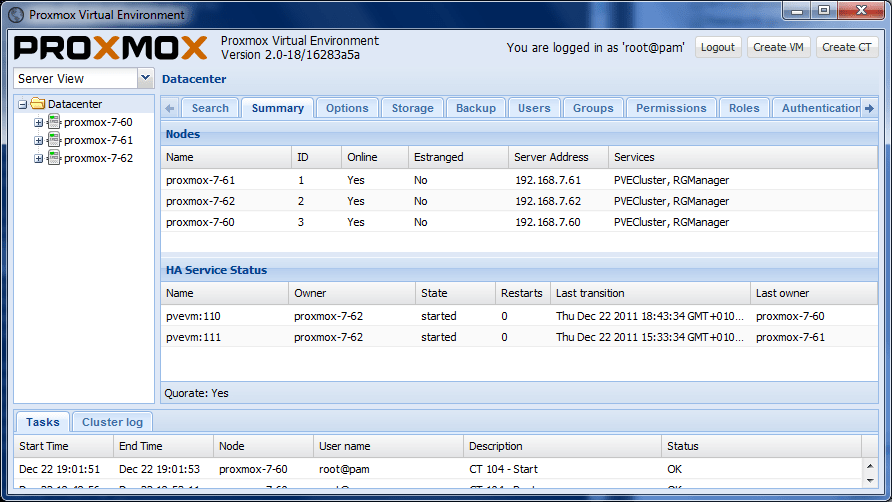
One of Proxmox VE’s standout capabilities is built-in clustering—with no additional licensing.
With multiple nodes, administrators can:
- Form a Proxmox cluster in minutes
- Live migrate VMs between hosts
- Enable HA to automatically restart workloads if a node fails
For SMBs and edge environments, this provides enterprise-style resiliency without enterprise pricing.
Storage Options and Flexibility
Proxmox supports a wide range of storage backends:
- Local storage (LVM, ZFS)
- Network storage (NFS, iSCSI)
- Distributed storage (Ceph)
- ZFS replication for DR scenarios
A popular setup highlighted often on Daily Cloud Blog is Proxmox + ZFS, offering snapshots, replication, and data integrity without third-party tools.
Networking Capabilities
Proxmox networking is built on Linux primitives, giving admins deep flexibility:
- Linux bridges
- VLAN tagging
- NIC bonding for redundancy and performance
- Advanced SDN features for complex environments
This makes Proxmox well-suited for on-prem, hybrid, and lab environments that require tight network control.
Backup and Disaster Recovery
Proxmox includes native backup functionality:
- Full and incremental backups
- Snapshot-based backups for minimal downtime
- Local or remote backup targets
For more advanced needs, Proxmox Backup Server adds:
- Global deduplication
- Compression and encryption
- Fast, reliable restores
Why Proxmox Is Gaining Popularity
At Daily Cloud Blog, we see Proxmox adopted most often for:
✅ VMware alternative initiatives
✅ Homelabs and learning environments
✅ SMB and edge deployments
✅ Private cloud proof-of-concepts
✅ Cost-optimized virtualization stacks
The open-source model, combined with strong community and enterprise support options, makes Proxmox a compelling long-term platform.
When Proxmox May Not Be Ideal
Proxmox might not be the best choice if:
- You rely heavily on vendor-locked enterprise ecosystems
- Your organization requires strict third-party certifications
- Your team lacks Linux administration experience
As with any platform, success depends on skills, use cases, and operational maturity.
Final Thoughts
Proxmox VE delivers a modern, flexible virtualization platform that aligns well with today’s infrastructure trends. As organizations seek alternatives to traditional hypervisors, Proxmox continues to stand out as a capable, production-ready solution.
For teams exploring open-source infrastructure or modern private cloud designs, Proxmox VE is absolutely worth evaluating.




 My Daily Cloud Blog
Leave a comment