Enterprise Architecture | Frameworks | Strategy
TOGAF Architecture Overview: Understanding One of Enterprise IT’s Most Recognized Frameworks
A practical overview of TOGAF, the Architecture Development Method (ADM), architecture domains, and why the framework still matters for modern cloud, infrastructure, and digital transformation initiatives.
In modern IT environments, architecture is no longer just about server diagrams, application stacks, or infrastructure layouts. It is about building a structured way to align business strategy, governance, data, applications, and technology platforms into a cohesive operating model. That is one of the biggest reasons frameworks like TOGAF continue to play an important role across enterprise organizations.
TOGAF, which stands for The Open Group Architecture Framework, is one of the most widely recognized enterprise architecture frameworks in the industry. It gives organizations a common language, a structured development method, and a governance-oriented approach for designing and managing architecture at scale.
Whether an organization is modernizing legacy platforms, driving cloud transformation, improving governance, or building a long-term digital roadmap, TOGAF provides a repeatable way to think about enterprise change.
Key idea: TOGAF helps organizations move from isolated technology decisions to a more intentional, governed, and business-aligned architecture practice.
What is TOGAF?
TOGAF is an enterprise architecture framework that helps organizations plan, design, implement, and govern architecture across the business. Rather than focusing on a single solution or technology layer, TOGAF promotes a broader view of how the enterprise operates and how technology should support strategic business outcomes.
At a practical level, TOGAF is used to answer questions such as:
- What is the business trying to achieve?
- What capabilities are required to support that strategy?
- How should applications, data, and infrastructure support those capabilities?
- What standards and governance models should guide implementation?
- How should the organization move from the current state to a target-state architecture?
Why TOGAF Matters
Many enterprises struggle with fragmented systems, duplicate applications, inconsistent governance, and technology investments that drift away from business priorities. TOGAF helps reduce that fragmentation by giving architecture teams a formal process and a shared structure for planning change.
In other words, TOGAF is valuable because it helps architecture become more than documentation. It becomes a decision-making discipline that guides transformation, promotes standardization, and improves alignment between executive goals and technical delivery.
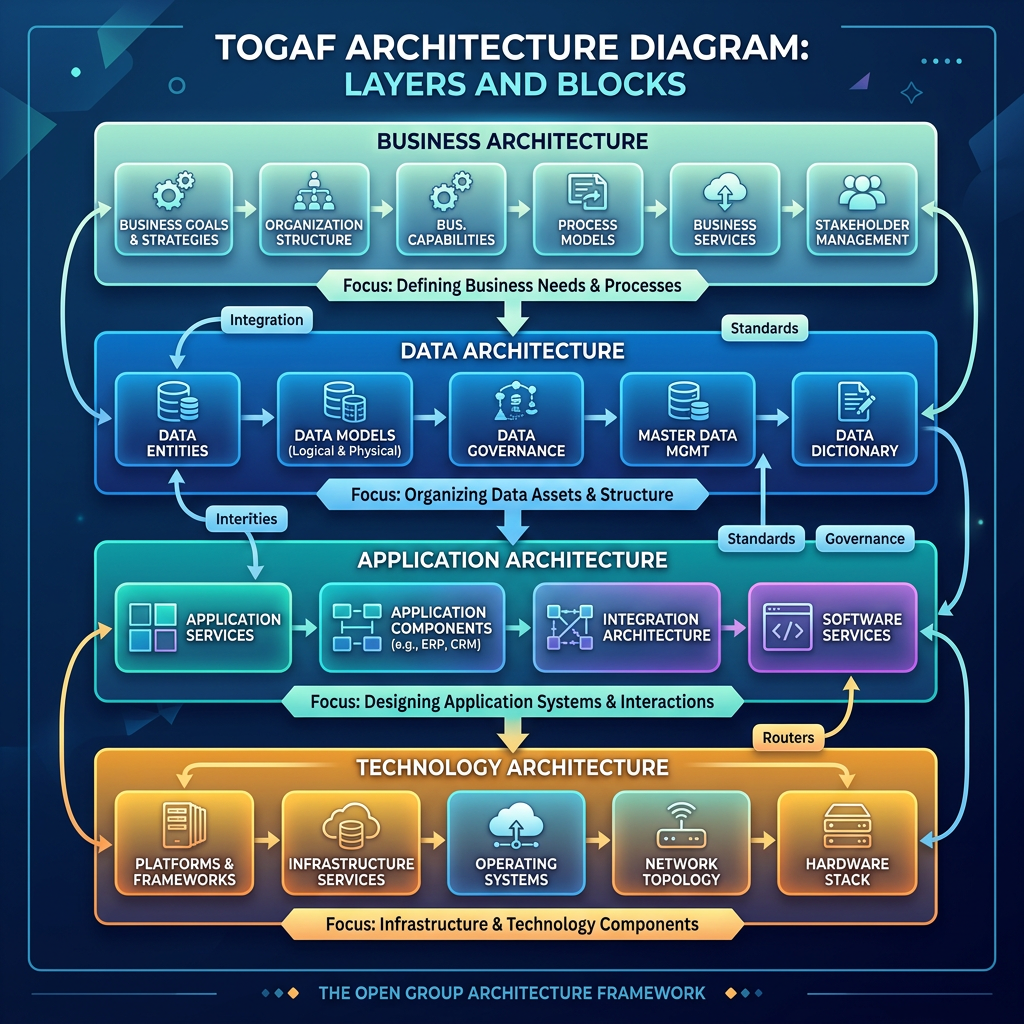
The Four Main Architecture Domains
One of the most useful ways TOGAF structures enterprise architecture is through four primary domains. These domains help organizations think across the full business and technology landscape instead of focusing only on infrastructure or applications.
Business Architecture
Focuses on business strategy, organizational structure, governance, capabilities, and processes. This domain defines what the business needs to do and why.
Data Architecture
Describes how enterprise data is structured, managed, secured, shared, and governed. It supports information consistency and strategic data usage.
Application Architecture
Defines the application landscape needed to support business capabilities and explains how those applications interact across the enterprise.
Technology Architecture
Covers infrastructure, platforms, networking, cloud services, security components, and technical standards that support enterprise systems.
The Core of TOGAF: The Architecture Development Method (ADM)
The best-known component of TOGAF is the Architecture Development Method, or ADM. The ADM is the core process architects use to build, evolve, and govern enterprise architecture over time.
The ADM is important because it provides a repeatable lifecycle for architecture work. It is not meant to be a rigid checklist. Instead, it is an adaptable, iterative approach that can be tailored to the maturity, scale, and needs of a specific organization.
ADM Phases at a High Level
- Preliminary Phase – Establish architecture capability, principles, and governance foundations.
- Phase A: Architecture Vision – Define scope, stakeholders, drivers, and target outcomes.
- Phase B: Business Architecture – Model business capabilities, value streams, and processes.
- Phase C: Information Systems Architectures – Develop data architecture and application architecture.
- Phase D: Technology Architecture – Define infrastructure, platforms, standards, and technical direction.
- Phase E: Opportunities and Solutions – Identify solution options and major implementation work packages.
- Phase F: Migration Planning – Build the roadmap and transition plan from current state to future state.
- Phase G: Implementation Governance – Ensure projects align with approved architecture direction.
- Phase H: Architecture Change Management – Manage ongoing evolution as the business and technology environment changes.
- Requirements Management – Continuously track and manage requirements across every phase.
What Makes TOGAF Useful in Practice?
TOGAF is especially useful when organizations need more than technical implementation guidance. It helps create structure for transformation by connecting business objectives to architecture deliverables such as principles, standards, roadmaps, governance models, transition states, and implementation priorities.
Organizations commonly use TOGAF for:
- Cloud transformation and hybrid architecture programs
- Application rationalization and modernization efforts
- Enterprise governance and standardization initiatives
- Business capability mapping
- Technology portfolio optimization
- Digital transformation planning
- Large-scale infrastructure and platform redesigns
Key Strengths of TOGAF
- Structured and repeatable: Provides a clear lifecycle for architecture development.
- Business-aligned: Keeps architecture tied to business drivers and strategic outcomes.
- Governance-friendly: Supports standards, reviews, and implementation oversight.
- Adaptable: Can be tailored for different enterprise sizes, industries, and maturity levels.
- Comprehensive: Encourages a full-enterprise view across business, data, applications, and technology.
Common TOGAF Challenges
TOGAF can be extremely valuable, but it is not automatically effective just because it is adopted. One of the biggest challenges organizations face is applying the framework too rigidly or turning it into a documentation-heavy exercise with limited operational value.
TOGAF works best when it is tailored to the business, scaled appropriately, and used as a practical architecture operating model rather than a theoretical compliance exercise.
TOGAF in the Cloud and Modern Infrastructure Era
Some people assume enterprise architecture frameworks are less relevant in fast-moving cloud environments, but the opposite is often true. Hybrid and multi-cloud strategies introduce complexity across governance, security, platform design, application placement, integration, cost management, and operational consistency.
TOGAF helps organizations define target-state architecture, clarify principles, standardize delivery patterns, and build realistic migration roadmaps. For cloud architects and infrastructure leaders, it can serve as a useful bridge between strategic planning and technical execution.
Who Should Learn TOGAF?
TOGAF is commonly associated with enterprise architects, but its value goes beyond that role. Solution architects, cloud architects, technical leaders, digital transformation managers, platform strategists, and IT decision-makers can all benefit from understanding the framework.
It is especially useful for professionals who operate between business strategy and technical implementation and need a more structured way to frame architecture decisions.
Final Thoughts
TOGAF remains one of the most influential enterprise architecture frameworks because it provides a disciplined way to connect strategy, architecture, governance, and transformation planning. It helps organizations look beyond individual projects and instead design technology environments that support the enterprise as a whole.
Whether the goal is cloud adoption, infrastructure modernization, application rationalization, or enterprise-wide transformation, TOGAF offers a strong foundation for building a more intentional and aligned architecture practice.
Bottom Line
TOGAF is not just a framework for creating architecture documents. It is a structured way to guide enterprise change, align IT with business direction, and govern transformation more effectively.
Continue the Architecture Conversation
If you are exploring enterprise architecture, cloud strategy, infrastructure modernization, or governance frameworks, follow Daily Cloud Blog for more practical breakdowns focused on modern IT and enterprise transformation.
Read more articles, share this post with your architecture team, and stay connected for more enterprise IT insights.


 My Daily Cloud Blog
Leave a comment