Containers | Kubernetes | DevOps | Cloud-Native | Application Modernization
Containers Technology: A Deep Dive into Modern Application Delivery
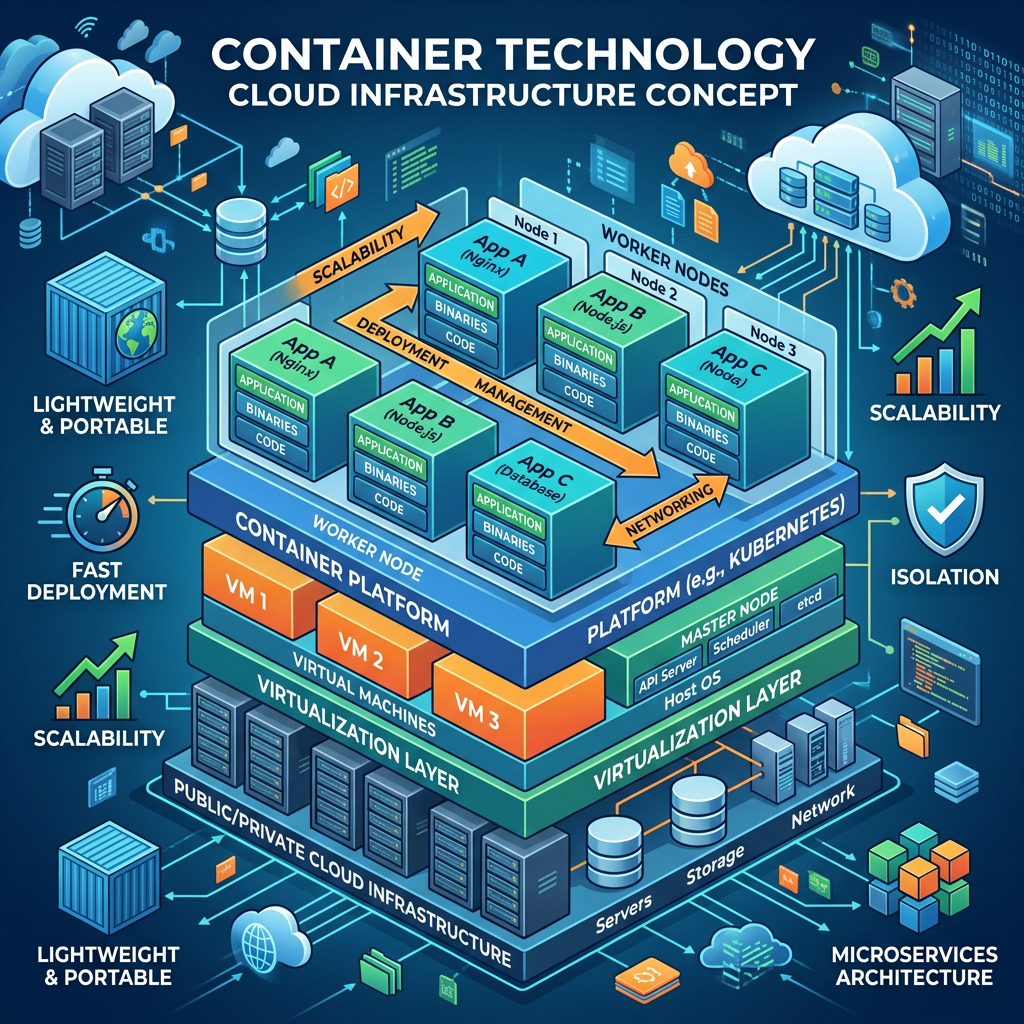
Containers have become a foundational technology for modern application delivery, allowing organizations to package applications, dependencies, libraries, and runtime components into consistent and portable units that can run across development, testing, production, on-premises infrastructure, public cloud, and edge environments.
Author: Christian Marrero
Blog: Daily Cloud Blog
Topic: Containers Technology Overview
Containers Technology
Cloud-Native • Kubernetes • Docker • Microservices • DevOps • CI/CD • Application Modernization
What Are Containers?
Containers are lightweight application runtime environments that package application code, dependencies, libraries, and configuration into a consistent deployable unit.
Instead of installing an application directly onto a server and depending on that server’s configuration, containers allow the application to carry what it needs to run. This makes the application more portable, predictable, and easier to deploy across multiple environments.
Why Containers Matter
Modern enterprise applications need speed, consistency, portability, and automation. Traditional deployment models often create problems because an application may work in development but fail in production due to differences in operating systems, installed packages, dependencies, or configuration.
Containers help solve this challenge by creating a standard application package that can move from a developer workstation to a CI/CD pipeline, container registry, Kubernetes cluster, cloud platform, or edge location.
With containers, organizations can reduce configuration drift, improve deployment reliability, increase automation, and create a stronger foundation for cloud-native application delivery.
Core Container Capabilities
Portability
Run applications consistently across development, testing, production, cloud, and on-premises environments.
Speed
Containers start quickly and support faster release cycles compared to traditional deployment models.
Automation
Container images fit naturally into CI/CD pipelines, GitOps workflows, and Infrastructure as Code practices.
Containers vs Virtual Machines
Virtual machines virtualize hardware and require a full operating system for each workload. Containers virtualize the application runtime and share the host operating system kernel.
This makes containers smaller, faster to start, and easier to scale compared to traditional virtual machines. However, virtual machines still provide strong isolation and remain valuable for legacy applications, full operating system requirements, and workloads that are not designed for containerized deployment.
Containers and Kubernetes
Containers are powerful by themselves, but Kubernetes provides the orchestration layer required to operate them at enterprise scale. Kubernetes manages scheduling, scaling, service discovery, rolling updates, self-healing, and workload placement across clusters.
For smaller environments, Docker or a basic container runtime may be enough. For enterprise environments, Kubernetes is often the standard platform for running containerized applications across cloud, hybrid, and on-premises environments.
Container Registries
A container registry is where container images are stored, versioned, scanned, and distributed. Registries are a critical part of the container lifecycle because they become the trusted source for approved application images.
Common examples include Docker Hub, Azure Container Registry, Amazon Elastic Container Registry, Google Artifact Registry, GitHub Container Registry, and private enterprise registries.
Security with Containers
Container security should be designed across the full lifecycle: image build, registry storage, deployment, runtime, networking, monitoring, and incident response.
Security Capabilities
- Private container registries
- Image vulnerability scanning
- Image signing and verification
- Least privilege runtime permissions
- Secrets management integration
- Network policies and segmentation
- Runtime monitoring and threat detection
- Patch management for base images
Containers and DevOps
Containers align closely with DevOps practices because they make application delivery more repeatable and automated. Development teams can build images, operations teams can deploy them consistently, and security teams can scan and enforce policies before production deployment.
When containers are combined with Infrastructure as Code, CI/CD pipelines, GitOps, and Kubernetes, organizations can create a consistent delivery model across multiple environments.
Where Containers Make Sense
- Modern web applications
- API-based applications
- Microservices platforms
- DevOps and CI/CD pipelines
- Cloud-native applications
- Stateless workloads
- Application modernization initiatives
- Hybrid and multi-cloud deployments
- Development and testing environments
- Edge computing workloads
Common Mistakes to Avoid
Final Thoughts
Containers represent a major shift in how applications are built, packaged, deployed, and operated. They bring consistency, portability, speed, and automation to modern IT environments.
For organizations moving toward DevOps, Kubernetes, cloud-native platforms, and hybrid cloud architectures, containers are one of the most important technologies to understand.
Container adoption should be intentional. The best results come when containers are combined with strong security practices, automation, observability, governance, and a clear understanding of which workloads are the right fit.
For infrastructure architects, cloud engineers, DevOps teams, and IT leaders, containers are no longer optional knowledge — they are a foundation of modern application delivery.
Stay Connected with Daily Cloud Blog
If you found this containers technology overview helpful, follow Daily Cloud Blog for more practical content on Kubernetes, DevOps, cloud-native platforms, hybrid cloud, virtualization, cybersecurity, and modern infrastructure.
Stay ahead with insights on AWS, Azure, Kubernetes, virtualization, cybersecurity, and modern infrastructure.
About Daily Cloud Blog
Daily Cloud Blog shares practical insights on cloud, virtualization, infrastructure, hybrid environments, and modern IT strategy.


Leave a Reply